
escort diary® of Jolie: On sailing


I learned to sail before I learned to be afraid of things, which I think is why I was good at it.
I was eight. Maybe seven, the memory is not precise on the year but very precise on the feeling, which was: I am on a catamaran and it is going fast and I am in charge of why. A catamaran at speed is not like other boats. Other boats move through water.
A catamaran, when you get it right, moves above it: one hull lifts, the sail catches, and suddenly you are skimming, half-flying, held up by nothing but wind and geometry and the very specific angle at which a child who weighs almost nothing is leaning backwards over open sea.
I went to sailing camp every summer. A month, every year, from the age of eight through adolescence, a month of salt and sunburn and rope burns on my palms and the specific exhaustion of a body that has been fighting wind all day: not the tiredness of effort but the tiredness of negotiation, because sailing is not a sport where you impose your will on the environment.
Sailing is a sport where you negotiate with the environment, and the environment does not care about your plans, and you adjust or you capsize, and capsizing is not failure, it’s just the ocean reminding you who is in charge.
I capsized constantly... which is is how you learn. Not from the successful runs; those teach you nothing except that you happened to be right this time, and how it feels to fly.
From the capsizes, from the sudden sideways lurch, the sail hitting water, the cold shock of going under, and then the climb back onto the overturned hull, and then the slow, ungraceful, physically demanding process of righting the thing while treading water and swearing in French at an age when I technically shouldn't have known enough swear words to sustain the exercise... but did.
What sailing taught me, and I didn’t understand this until much later, until I was an adult and recognised the pattern in every other part of my life, is that control is an illusion and the correct response to this information is not to panic but to adjust.
You cannot control the wind, you cannot control the current, you cannot control the wave that arrives from a direction you weren’t watching.
What you can control is the angle of the sail, the position of your body, and the speed at which you respond to the thing you didn’t see coming. That’s it, that’s the whole skill: read what’s happening, adjust before it’s too late, and accept that the ocean will always be bigger than your plan.
I have tried my hardest to use this skill in every job I’ve ever had, every relationship I’ve ever navigated, and every bureaucratic nightmare my life has ever produced. The ocean taught me more about adaptive strategy than my MBA did, and the MBA cost fifty thousand dollars, while the ocean was free.
I don’t sail anymore. I want to, but the prices here are unjustifiable. I do want to go back, to find a boat and mooring that doesn't cost more than my rent and a blood sacrifice. Instead, I go to amy favourite pier, and I swim, and I do nothing.
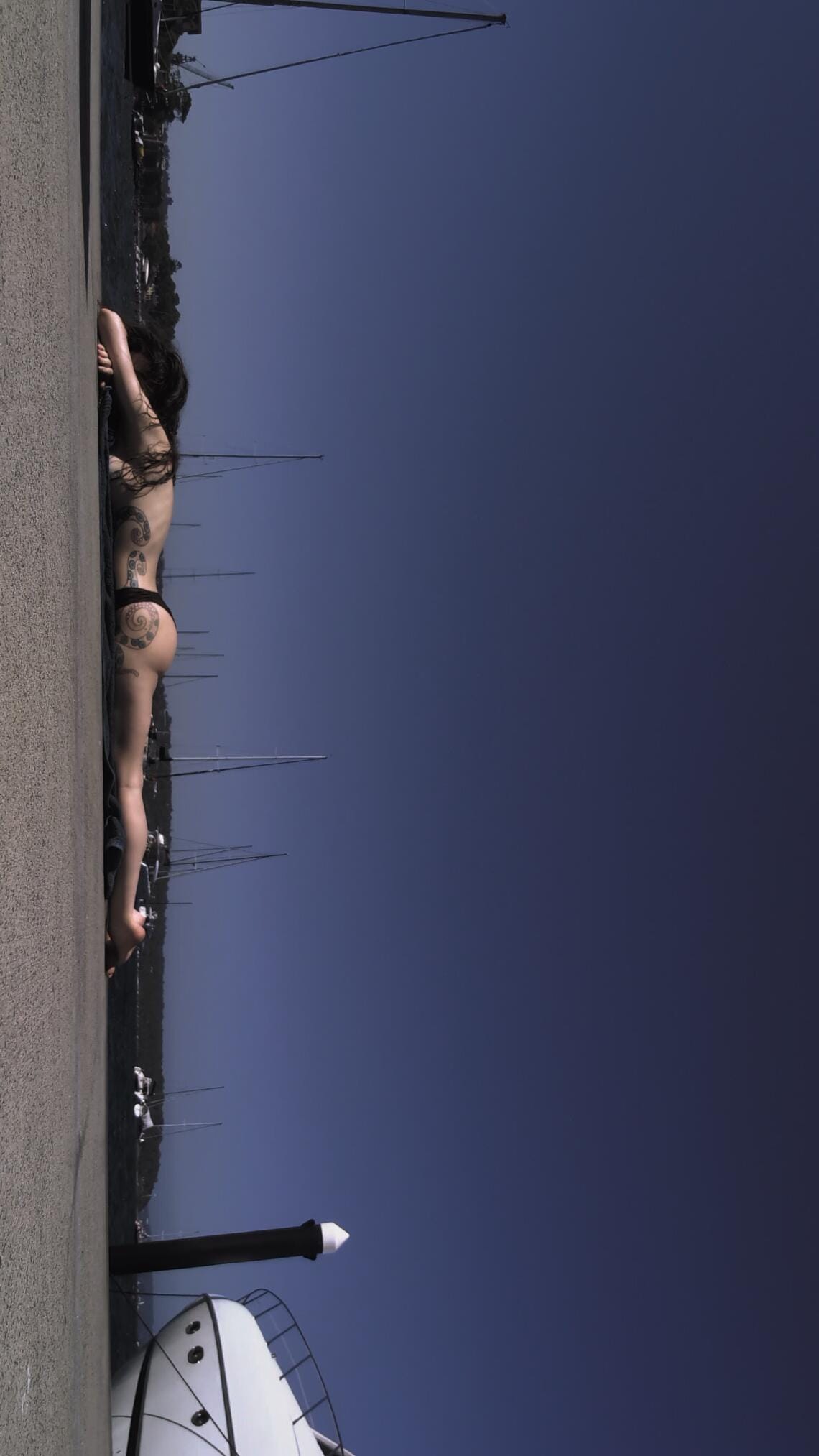
I need to explain what I mean by “nothing” because I don’t mean it the way lifestyle content means it, with the implication that doing nothing is a radical act of self-care that you should photograph and caption. I mean nothing. I mean I go to a pier: a real pier, a working pier, the kind with boats actually moored to it and barnacles on the pylons and water that is, I will admit, not entirely what you’d call pristine, and I get in the water and I swim between the hulls and I come back and I lie on the hot concrete and I dry like a lizard on a rock and I do nothing.
The water at Sydney piers is not postcard water, though. I want to be honest about this because I think honesty is more interesting than aesthetics. It is harbour water... things live in it that you do not want to think about while you are in it. It has a particular colour that is not blue and not green but the specific muddy teal of water that is doing a lot of work: hosting boats and fish and runoff and the occasional shopping trolley and the accumulated sediment of a city that has been using this harbour as a living room for two hundred years. It is, objectively, a little gross.
I don’t particularly care nor mind. I grew up high up in the mountains where we build immune systems strong enough to survive dirt and diseases while the temperature makes you want to take a bath in lava.
I dive once, then I haul myself onto the concrete, which is hot, properly hot, the kind of hot that brands itself onto your wet skin so you feel the exact shape of your own body printed in warmth, and I lie there. Face down while the concrete radiates heat from below and the sun delivers it from above and I am between the two, warming from both directions, and the boats bob beside me, and the water slaps against the pylons in that specific harbour rhythm: not waves, not lapping, slapping, a lazy percussive sound that is the heartbeat of every pier I have ever loved, the bells on some boats...and I am doing nothing.
I am very good at doing nothing near water and I am very bad at doing nothing anywhere else. This is, I think, because water gives the brain something to listen to that isn’t itself. The sound of water is not silence and it is not noise, it is texture. It fills the space that my overachieving too-full-of-energy usually fills, and it fills it with something that asks nothing of you, and the asking-nothing is the whole gift.
I bob. That’s the word for what I do in the water when I’m not swimming: I bob, like a buoy. Like something tethered to the floor of the harbour that rises and falls with whatever the water decides to do. Bobbing is the aquatic equivalent of the thing I do on my balcony with the birds: it is being present without being productive, being alive without being busy, being a body in an environment that doesn’t need me to be anything other than a body. The water goes up, so I go up. The water goes down, so I go down. The decision is not mine, but the surrender is. And the surrender is, after a life spent controlling and adjusting and negotiating and strategising, the most luxurious thing I forced myself to learn how to do.
Summer is coming. I can feel it in the mornings already: that shift in the light, the warmth arriving earlier, staying later, the air starting to carry the particular promise of a Sydney summer which is: everything is about to become easier. The concrete will be hot, the water will be (mostly) swimmable. The boats will be there, clinking and bobbing and going nowhere and being beautiful about it.
I will be there too, on the concrete, drying like a lizard.
Listening to the harbour do its work.
Doing nothing with the same commitment and intensity that I bring to everything else, which is to say: completely, stubbornly, and with no intention of stopping until the sun tells me it’s time or until my poor european blood begs me for shade.
If you want to find me in January, try the piers. Look for the small French woman lying on the concrete on the private side of the piers she managed to get the code to, with her eyes closed and a look on her face like someone who has figured out the one thing worth knowing, which is: the best thing you can do with a body is sometimes absolutely nothing at all.
J x

